Advertorial
Reader Stories
I Refused Gabapentin for 2 Years. Here’s What Happened to My Feet.
By Susan Hale, reader contributor · Updated
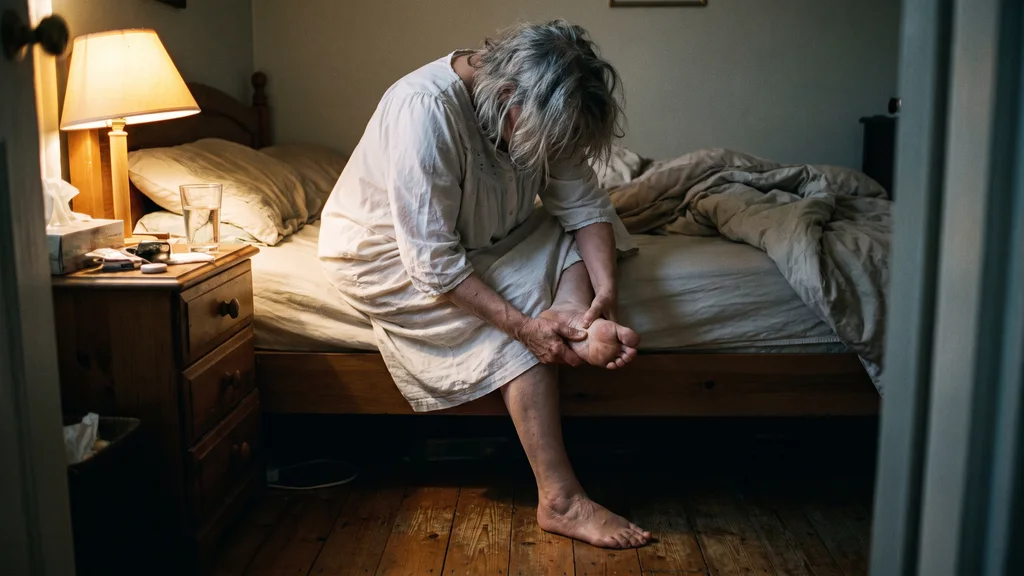
And by the end of this, you’re going to be angry.
It’s long. Read it anyway. It took my mother eleven years to lose a foot. You can give this ten minutes.
Because three things are happening right now:
One – Your feet are on a countdown. Burning now, numb next. And numb is the part nobody warns you about, because numb is when you stop feeling the sore.
Two – Your doctor’s only plan is a pill aimed at your brain, not your feet. Gabapentin, then more of it, then Lyrica, then “learn to live with it.”
And three – There’s a multi-billion-dollar nerve-pill industry that gets paid on every refill and every dose increase, as long as you’re on the ladder.
So let me tell you what happened to my mother. Her feet are the reason I said no.
We live three streets from my parents, in the house Tom and I bought in 1994. Most mornings Mom walked to our kitchen, then to the post office, then home, and she did the crossword in pen at our table while I made lunch. That was her life. It wasn’t much. It was hers.
For YEARS, and I mean eleven years straight, my mother was on the nerve-pill ladder.
It started with gabapentin. Her doctor called it “the standard of care” for burning feet. Said she’d take 300 at night, and he’d see her in three months.
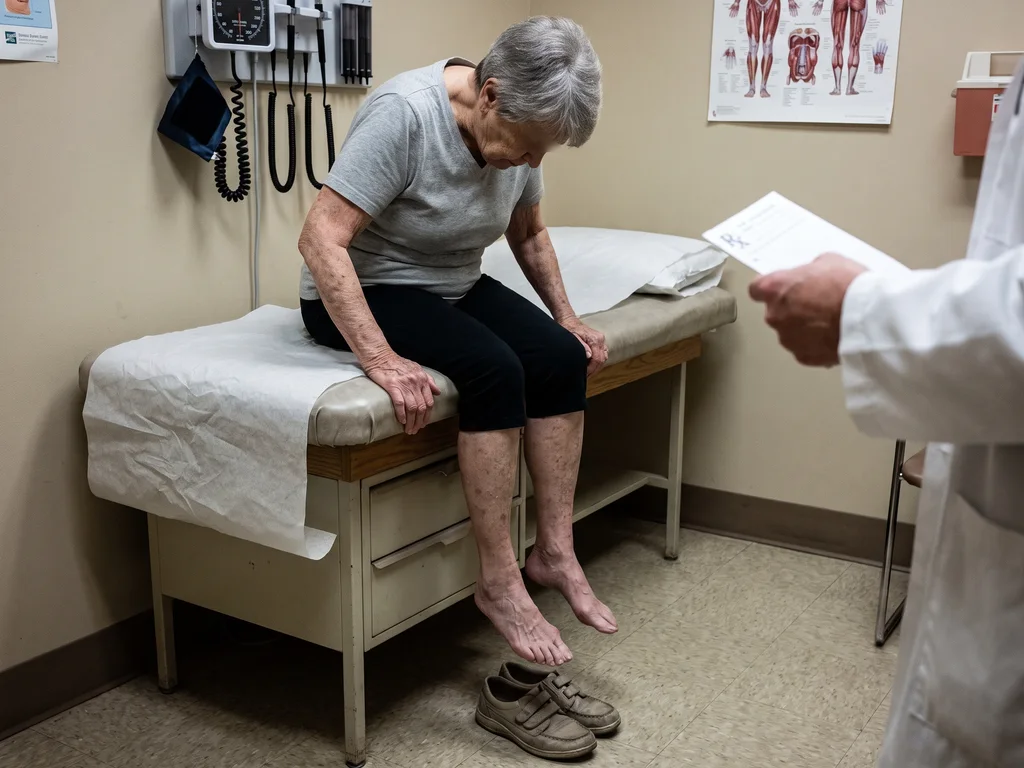
Within six months, the 300 stopped holding her through the night.
Not like she was imagining it. I’m talking about 300 going to 900. Then 1,800. Then 2,400, with Lyrica on top.
That made her live by the pill clock. She planned her whole day around the next dose.
Her head? Gone in a fog by lunchtime. She missed the turn onto my street twice and handed Dad her keys. She called the dog by the old dog’s name. Woman used to do the crossword in pen.
If you have watched your own mother reach for a word she has used for seventy years and not find it, you know what that does to your chest.
And under all that fog, her feet stopped burning and went numb.
Her doctor called that a good sign. “The pills are working.” Dad found her at the kitchen counter one night in one slipper, and she hadn’t noticed.
If you have ever checked a foot for a sore its owner couldn’t feel, you know.
And you know what the doctor said when we told him she was walking into door frames?
“That’s normal. We’ll go up on the dose.”
“We can add something for the mood.”
“The drowsiness is a trade-off. The benefits outweigh it.”
So they added a pill for the mood the other pills gave her.
The burning got a little better. Great, right?
Wrong.
Now she slept twelve hours and woke up drugged, because she was. Every single day. Dad kept a chart on the fridge so she’d know if she’d taken the morning dose.
And her feet got WORSE under the pills. Not better. Worse.
She’d sit in her chair by the window. Stopped walking to the post office. Stopped calling her sister. Just… sitting there. Going through the motions.
My dad said it was like watching the woman he married go somewhere he couldn’t follow.
And here’s the part that made me sick years later, when I found the study: people on gabapentin for pain had an 85 percent higher risk of the memory trouble that comes first, and a 29 percent higher risk of dementia itself.
They had her on those pills for YEARS.
Years of fog. Years of feet she couldn’t feel and had stopped checking. Years of appointments where they raised the dose or added a pill, but never once, not ONE TIME, did anyone say, “Maybe we should look at what’s happening to the nerves in her feet.”
Then a sore opened under the ball of her right foot. Nobody found it for eleven days, because she couldn’t feel it. The wound clinic said that’s how most of these start. Then came the words we’d been dreading:
“It’s time to talk about the toe.”
There was no choice left by then. The toe came off first.
The surgery was “successful.” That’s what they told us.
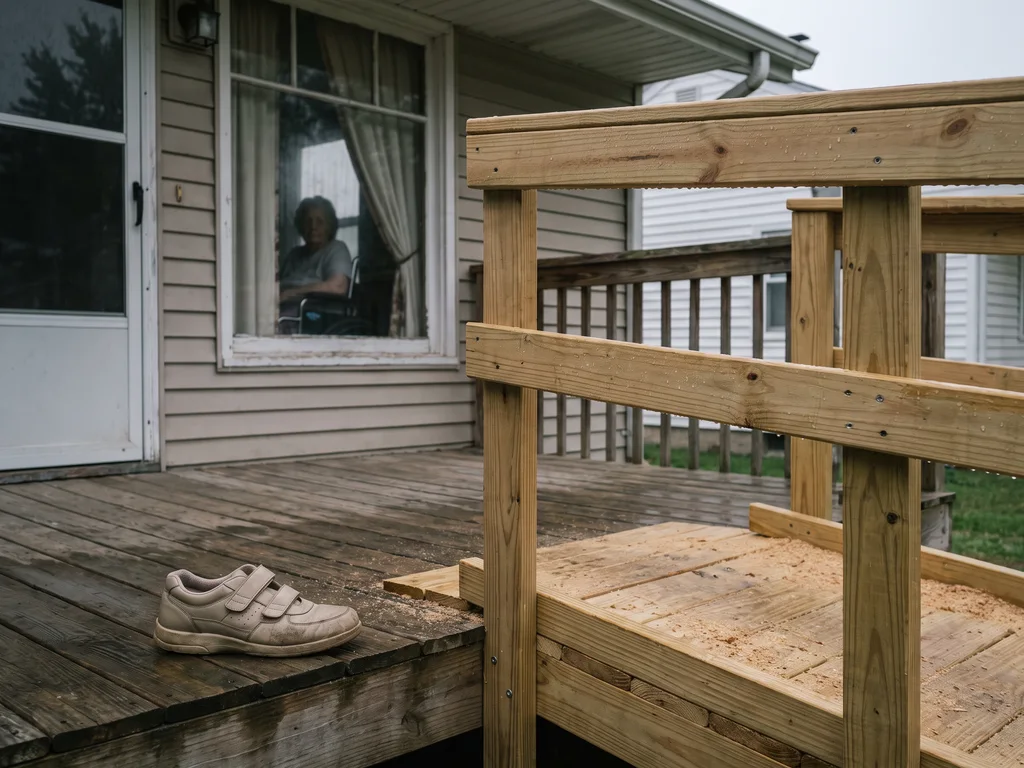
But successful meant a ramp on the porch that Tom built. Successful meant a chair with wheels. Successful meant watching the mailman from the window instead of walking to the post office.
And then the front of that same foot started going.
They took that too, same clinic, same words.
The wound-clinic nurse said something to Dad in the hallway that she didn’t think I heard. Half the people who lose a foot this way are gone inside five years. She said it like a fact. It is one.
She’s still here, eighty-one, in that chair by the window with one shoe on, still counting the hours to the next dose, because nobody has a plan for getting her off them.
Now, fast forward to two years ago.
I’m 57 years old. I’m pulling on my socks one Tuesday morning in September and the left one feels wrong. Like there’s a wrinkle in it I can’t find.
I sat down, thought I’d slept on it funny.
It’ll probably wear off by lunch, I told myself.
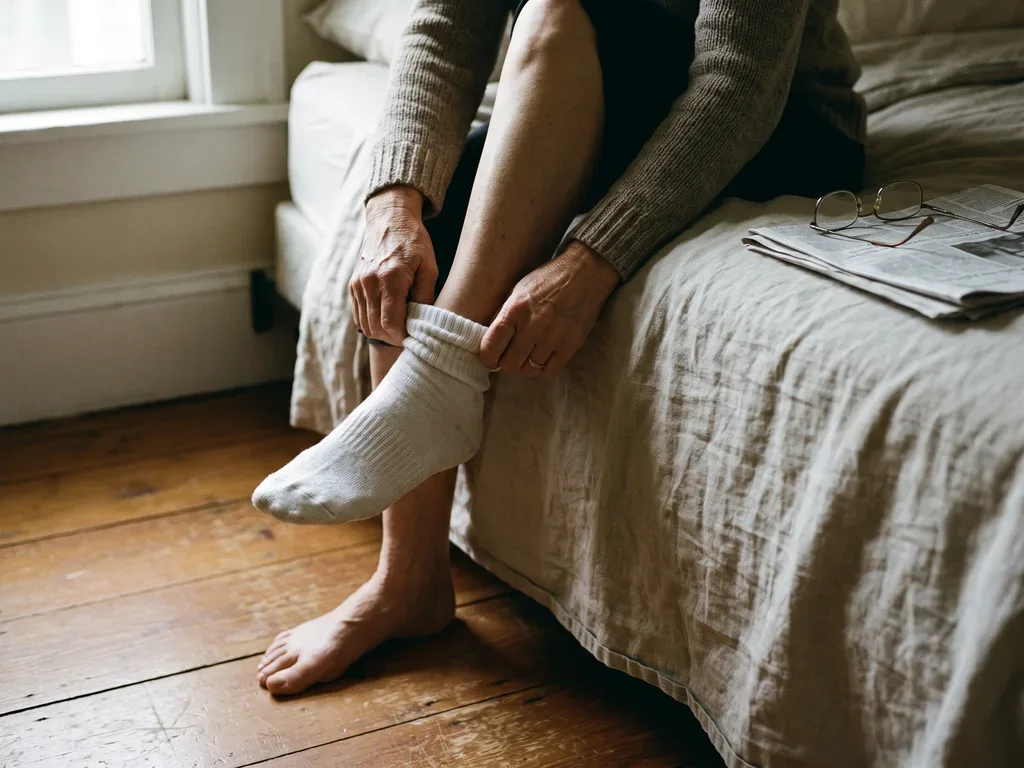
Within a week, it’s waking me up at 2:40 in the morning.
A month later, it’s not getting better. On October 14th I finally go get the nerve test.
Results say “peripheral neuropathy” and “reduced sensation in both feet.”
The neurologist looks at the printout. Frowns. Taps his pen against the desk.
And he says the words I’d been dreading for eleven years:
“The nerve damage is there. We’ll start you on gabapentin, 300 at night, and go up from there. If that doesn’t hold, there’s Lyrica.”
I asked him if there was anything else we could try. Anything besides pills and waiting for my feet to go numb.
He gave me this look. Like I’d asked him something he didn’t have time for.
“Keep your sugar down. Check your feet every night. Good shoes. We’ll see where things stand in three months.”
That was it. That was his whole plan. Eleven years of watching my mother’s life get taken apart by the pill ladder, and his advice was good shoes.
I sat in the parking lot for twenty minutes after that appointment. Just sitting there, staring at the steering wheel, with his prescription on the passenger seat.
Because it hit me right then: he wasn’t going to help me find an answer. He was going to raise my dose until I couldn’t feel my feet and call that working. That was the plan. That was the WHOLE plan.
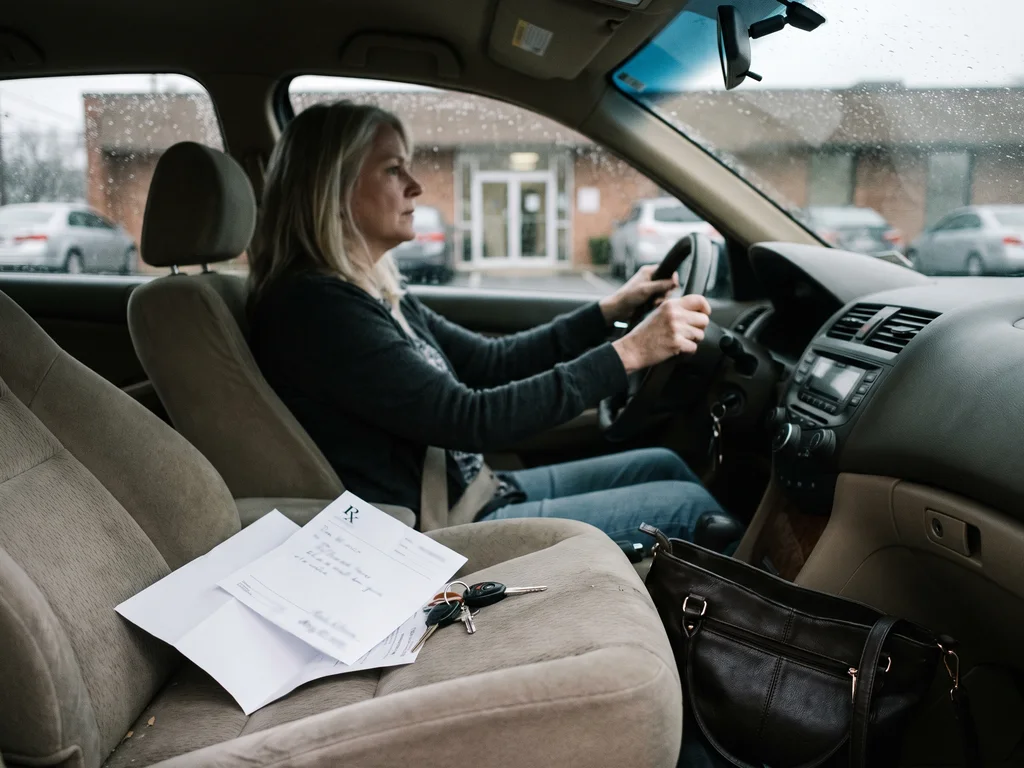
And I made a decision right there in that parking lot. I folded his prescription in half and put it in the glovebox.
I am NOT starting the pills.
I’m not following my mother’s road.
There has to be another way.
So I did what he told me to do.
I kept my sugar down. I walked every morning. I checked my feet with a hand mirror every night. I bought the good shoes. I took the B12. I rubbed in a magnesium cream from the pharmacy that took the edge off for about an hour.
Three months later, I go back for the follow-up.
The burning? Still an 8 out of 10 on bad nights.
And it had moved up past my ankle.
He looks up from his screen. “Did you start the gabapentin?” No.
“Then we start tonight. Three hundred at bedtime, and we go up from there.”
I looked at that screen and I felt rage building in my chest.
Because I’d DONE everything he told me to do. Everything the diabetes clinic says to do. And it wasn’t enough.
And now his only plan is the same pill ladder that took my mother apart, one dose at a time?
Tom thought I was being unreasonable.
He said I was scaring him by refusing the pills. He said half the men at the lodge are on gabapentin and they’re “doing fine.” He said I was “turning into one of those people,” rubbing creams on my feet instead of listening to my doctor. “Just take the pills, Sue.”
That one stung. Because he’d been there for all of it. He built the ramp. He watched my mother go from the crossword in pen to one shoe in a chair, right alongside me. But somehow now that it was MY turn, I was supposed to fill the prescription and shut up about it?
Easy for him to say. He wasn’t the one sitting on the bathroom floor at two in the morning with his feet on the cold tile, wondering if he’d spend the next twenty years in a chair by the window like my mom.
So at this point, I’m furious. At my doctor, at Tom, at all of it.
And I started asking questions that nobody wants you to ask:
Why does a pill for my feet have to go through my stomach and my brain first?
Why is “we’ll go up on the dose” the only plan they have, when going up on the dose is what put my mother in that chair?
And why does nobody ever talk about what’s actually happening inside the foot, what the nerve is missing, why it started burning in the first place?
I told my doctor I wanted three more months. He wasn’t happy about it. He gave me this whole speech about how “the numbness can become permanent” and “we need to get ahead of this.”
But I stood my ground.
Three more months.
That night I went out to the car and took his prescription out of the glovebox. I read it under the dome light. Gabapentin, 300 mg. Then I folded it back up and put it back where it was.
So I pulled out my laptop and started digging. Because clearly nobody else was going to figure this out for me. Not my doctor with his “we go up from there.” Not Tom, who thought I should just take the pills and stop making waves.
I read everything I could find about neuropathy. I wanted to know why a nerve burns, why some people go numb in two years and others never do, and what actually happens to the tiny nerves in your feet.
And every mainstream medical site was giving me the same four answers: “Control your blood sugar. Take your B12. Gabapentin for the pain. Learn to manage it.”
But then I stumbled across a research paper from a neurologist who studies why the nerves in the feet break down first.
And he explained something I had never once heard in eleven years of appointments.
The starving nerve.
The tiny nerves in your feet are fed by blood, like everything else in your body. When the blood flow that feeds them slows down, they’re starved of oxygen and nutrients. A starved nerve gets damaged and inflamed. And an inflamed nerve misfires. Nobody had ever told me that.
That misfiring is the burning, the tingling and the numbness, all three. You don’t have three different problems. You have one.
And once you understand that, you understand the pill. It goes in your mouth, through your stomach, your liver, your bloodstream, your heart and your brain. Your feet are the last stop on the longest road in your body. Gabapentin doesn’t even try to get there. It goes to your brain and turns the volume down.
Here’s what the nerve in your foot actually needs:
It needs something to calm the inflammation, something to let the blood vessels open back up so fresh blood can feed it, and something to protect it through the night.
When those things actually reach the nerve? The inflammation calms down. The blood vessels open back up. Fresh blood feeds the starving nerve, the misfiring stops, and the burning fades.
But when it’s a pill that stops at your brain? Or a cooling jar that’s menthol alone? The menthol is what you feel. It cools on contact and it opens the pathways in your skin for whatever comes next. In those jars, nothing comes next. Twenty minutes later your feet are right back where they started.
That’s when the nerve stays starved.
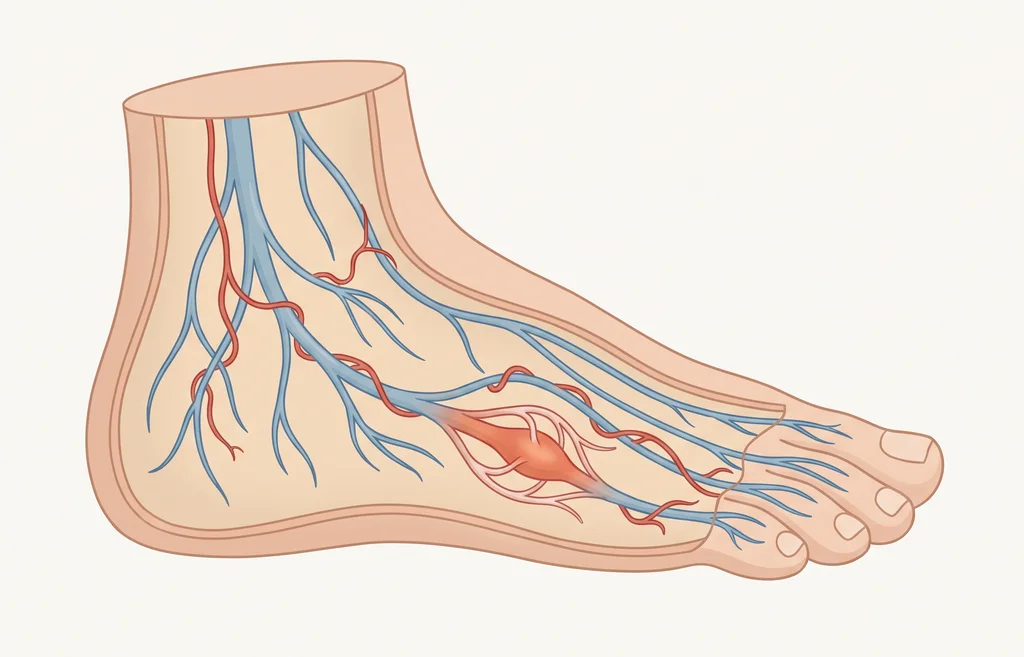
Your nerve stays inflamed. The burning keeps climbing. And no amount of good shoes is gonna bring the blood flow back to it.
So you get:
-
The bedsheet feels like sandpaper on your toes.
-
You can’t tell if your sock is bunched or if that’s just your foot now.
-
You hold the wall on the way to the bathroom at night.
-
You lie awake wondering if you’ll end up in that chair, like your mother.
-
You check your feet with a mirror every night, hunting for a sore you wouldn’t feel.
You get that heavy dread every time a doctor says the word “permanent.”
You know you’re one fall away from a hospital bed.
You feel trapped between feet that burn all night and the pills that put your mother in that fog.
And the science actually made sense. It explained everything: why the B12 didn’t help, why the magnesium cream lasted an hour and quit, why my feet felt like they were fighting me no matter what I did.
And it made me angry. Because this information isn’t hard to find. Doctors just don’t look for it. My mother’s doctor had eleven years of watching her get worse on the pills, and he never once asked why the nerve was burning in the first place. He just went up on the dose.
And here’s the part nobody says out loud:
The nerve-pill system KNOWS the pill never reaches your feet. They know gabapentin works on your brain, not on the nerve. But unless you ask, nobody mentions there might be another way to reach the nerve.
Why?

Because there’s no money in a jar you rub on at home.
You can’t bill insurance for something you rub in yourself.
There’s no money in a nerve that stops burning and doesn’t come back.
There IS money in a refill every thirty days for the rest of your life. In the visit every three months to go up on the dose. In the second pill for the mood the first pill gave you. In the nerve clinics selling ten-week packages, while your feet never actually get better, just numb.
So I kept digging. I read the clinical studies. I read the research papers. I talked to people in the online groups who’d managed to stay off the pills…
And I found out there’s actual RESEARCH on this. Real clinical work.
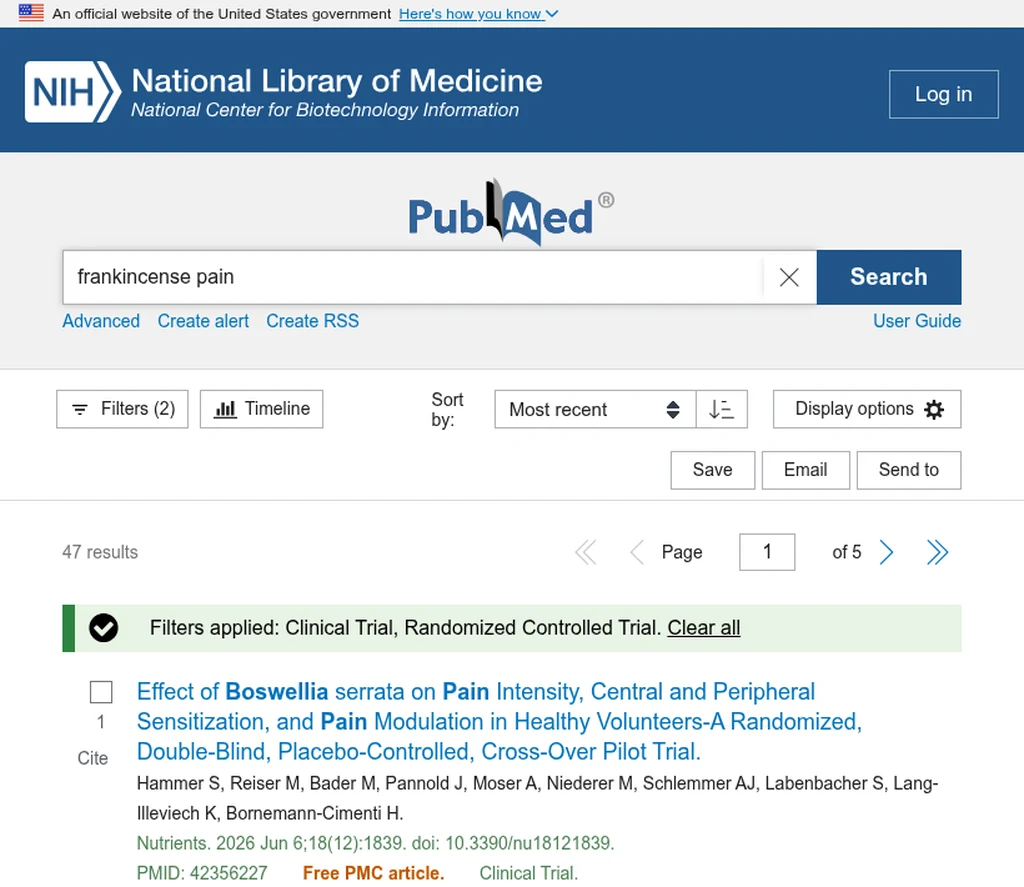
Compounds like boswellic acids from frankincense, MSM, and arnica have been studied for years for inflammation and pain. Type frankincense and pain into PubMed, the government’s medical library, and tick the box for clinical trials. Forty-seven come up, and that box only lets through randomized controlled trials.
There’s even a 2025 study where researchers rubbed frankincense straight onto a diabetic foot. The blood vessels opened back up and the feeling came back into the nerve. Nobody swallowed a pill to get there.
But the key is the route. They have to reach the nerve, not sit on top of your skin.
But you’ll never hear your neurologist mention it.
So I started looking for something you rub on that could actually reach the nerve.
And here’s where I hit a wall.
Most of the creams out there are half answers. The magnesium creams everyone is selling settle a tight muscle for about an hour.
And your problem was never the muscle. It’s the nerve inside it. The capsaicin creams are burning on top of burning. You rub them on and hope, but nothing is reaching the nerve.
Some of them look impressive on the label. But read the back and it’s mostly water and fragrance.
I tried three different “maximum strength” creams from Amazon and the pharmacy. I used them every night for six weeks.
The burning? Still an 8.
The two in the morning wake-up? Still every single night.
I was about to give up and fill the damn prescription. That night the slip was on the kitchen table, next to my purse.
But then I found a comment under a post in a diabetes group. A woman said she hadn’t touched gabapentin in eight months. She rubbed a balm on the spot that burns, thirty seconds before bed. That was it.
I wrote to her. She called me that night. Her name is Dolores, she’s 71, and she lives outside Tucson.
She told me to get a pen and my hand mirror and draw a circle on the spot that burns the worst. “That’s where the jar goes,” she said. “Not your whole foot. The circle. Everything you tried so far went everywhere but there.”
I still have the circle. I redraw it every week.
The product was called Natural Comfort Balm, from a company called Nurovita.
So I went to their page, ready to be disappointed like I had been with every other cream I’d tried.
I read their page three times.
The whole jar is built around one thing: frankincense. Not the incense from church. The resin of a tree in the desert of Oman, cut by hand for three thousand years. The Egyptians wrote it down as a healing remedy for pain and inflammation. It’s the one in the Christmas story.
And researchers finally worked out why it works. The boswellic acids in it switch off one enzyme in the chain that keeps a nerve inflamed. Nurovita doesn’t use the raw resin. They standardize every jar to 65 percent boswellic acids, the clinical strength.
And it isn’t just the frankincense. There are three steps to it.
Menthol is what you feel first. It cools on contact and opens the pathways in your skin.
MSM, a natural sulfur, carries the frankincense through the skin, straight down to the nerve. The inflammation calms down, the blood vessels open back up, and fresh blood feeds the starving nerve.
Arnica and vitamin E build a shield over that spot so the comfort lasts through the night.
Nothing you swallow. Zero capsaicin. You feel the cool first, then a warmth settles in under it, and that is a different thing from the pepper burn the other creams gave me. The botanicals are lab-tested, and the balm is patch-tested on real human skin.
And once I knew the name, I kept seeing it. Two more women in that same diabetes group had been using it since winter. A man in the neuropathy forum wrote that he’d been off Lyrica since spring. They all said what that first comment said. The same jar, the same thirty seconds before bed.
But that’s not even the part that sold me.
They understood something simple: the nerve in your foot is starving, and you have to feed it RIGHT THERE, on the spot. Through the skin, not through your stomach.
And they offer a 90-day money-back guarantee. If you don’t notice a difference in 90 days, they refund you, even if the jar is empty.
So I ordered it. I took the buy two, get one free, because if it worked I wasn’t going to run out.
And I’m not gonna lie, I was skeptical as hell. But it was one more try before I filled that prescription, and with 90 days to send it back, what did I have to lose?
I started using it every night before bed. I rubbed it into the worst spot first, the ball of my left foot, for about thirty seconds.
Night one? The cool wave came in under a minute. The burn still came, but softer. I woke at three anyway.
Night three? I slept until half past four. That hadn’t happened in a year.
Night five? That was the one I was waiting for, because the hour mark is where every cream before this had quit on me. The cool would go and the burn would come right back. I lay there and waited for it. It didn’t come.
Night seven? I woke up at six, in the same position I fell asleep in. I never saw the bathroom floor.
Now I’m paying attention.
Week two? I stepped out of the shower and felt the bath mat under my heel. First time in months.
Week three? Tom looked up from his coffee and said, “You came down the stairs like a normal person.” I hadn’t even noticed.
Week four? I did the grocery run. The WHOLE store, and back to the car, without once looking down at my feet.
Six weeks in? The burning is a 2 most nights. And this morning I walked barefoot across the wet grass to get the paper, and I felt every blade of it.
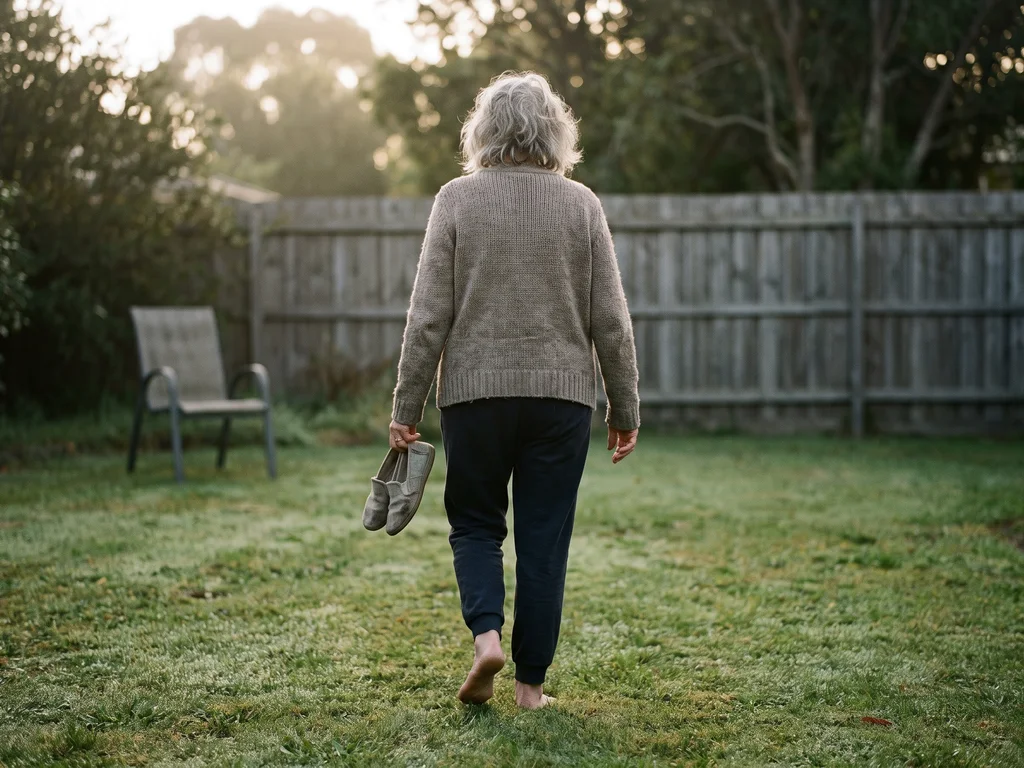
I go back to the neurologist at the three-month mark. He asks about the burning.
I say, “Most nights? A 2. Some nights, nothing.”
He takes out the pin and runs it along the sole of my foot. “You’re feeling that?” I’m feeling that.
“Well,” he says, “I’m not writing you anything today. Keep going.”
He didn’t mention gabapentin. He didn’t go up on anything. Just “keep going.”
I went back to the same doctor last month. Fourteen months in now. He did the pin on both feet, toe to heel. Then he checked the ankle, where the burning had been climbing, and he actually paused. He took his glasses off and set them on the desk.
“I have to be honest with you,” he said. “When you turned the pills down, I didn’t think this was going to go well. You have more feeling in your feet than most of my patients who’ve been on gabapentin for years.”
I just sat there for a second. Because this was the same man who gave me that look when I asked if there was anything else. The same man whose whole plan was to raise my dose until I couldn’t feel my feet.
And now he was telling me I could feel my feet better than the people on his pills.
I didn’t say I told you so. I didn’t need to. I just needed to hear him say what I already knew: that I was right to keep looking. And the burning has not moved past my ankle since.
The burning? Most nights I don’t even think about it.
I sleep through. I feel the floor under both feet. I don’t have those two-in-the-morning wake-ups anymore.
I’m NOT on the pills. I’m NOT checking my feet every night for a sore I can’t feel. I’m NOT my mother.
I broke the pattern. And that prescription is still in the glovebox, folded in half. It’s the only piece of paper I own that I’m proud of not using.
And Tom, the one who said I was “turning into one of those people”? He came to me a few weeks ago. He said he could tell something was different about me, and it wasn’t just my feet. I was sleeping. I was in a better mood. I wasn’t dreading every appointment anymore.
He asked me what exactly I’d been using. I told him about the balm. I showed him the trial. He didn’t say much. But that night I caught him with his socks off, pressing his thumb into his own toes, the pins and needles he’d never once mentioned.
The next morning, he asked if he could use some of my balm.
Two weeks later, he ordered his own jars. All three.
I took it to my mother, too. On Sundays I rub it into what’s left of her foot. Numb is numb. Nobody promised her that back, and I won’t promise it to you.
But she says it’s the first time in years that foot has felt warm. That’s all I’ll say. It’s more than eleven years of pills ever gave her.
The prescription is in the glovebox. The jar is on the nightstand. That’s the whole system.
Because the second you feed the nerve right there, on the spot, through the skin, you don’t need their pill ladder anymore.
You don’t need their three-month visits.
Your feet start FEELING the way they’re supposed to.
A nerve that burns is a nerve that’s still alive, and still reachable. Numb is what comes after. And the parts that go fully numb, nobody promises you back.
Right now, if your feet burn at night and your doctor is talking about gabapentin, you can still reach that nerve.
And if you’re already on the pills, that changes nothing here. The pill goes to your brain. The jar goes to your foot. One has nothing to do with the other.
But if you wait six months? A year? It spreads. Toes first, then the whole foot, then the fingers.
And then it takes longer to get the feeling back.
Every month that goes by, people with burning feet they can’t fix realize they should have tried this earlier.
They’ve been put on a dose they didn’t want, then a higher one, and one day they find a sore on the bottom of a foot they can’t feel. That’s how the toe conversation starts. That’s how it started for my mother.
So if any of this is you, read the next part twice.
Your feet burn worse every month.
Your doctor has already said the word gabapentin.
You check your soles in a mirror every night.
Your sugar is in range, you wear the good shoes, you take the B12, and it’s still an 8.
You’re terrified of following your mother’s road into that chair.
And someone in your life keeps telling you to just take the pills and stop looking.
None of that is you failing. You did everything they told you. The good shoes don’t reach it. The B12 doesn’t reach it. The magnesium cream sits on top for an hour and quits. Nobody ever told you about the route.
This is the time.
Not in three months, when you’re sitting in that office with the prescription in your hand and your doctor saying “we’ll go up on the dose.”
Right now.
I put the link below. It’s the only place they sell it. If the same name shows up on Amazon, walk past it.
And honestly? Even if you’re as skeptical as I was, get a jar. Use it every night for 90 days, thirty seconds before bed, and if your nights don’t change, they give you every penny back. See if your feet respond the way mine did.
Because the pill ladder isn’t coming to save you. It didn’t come to save my mother. They make too much on the refill to ever let you off it.
You have to save yourself. And so does everyone who told you to just take the pills.
Go get it. And get your feet back while they can still feel.
My doctor didn’t believe it would work. Tom didn’t believe it would work. But my feet don’t lie.
👉 See the balm I use (90-day guarantee)
~ Susan Hale, 59. Fourteen months off the ladder.
P.S. If your doctor has told you to “just start the gabapentin,” or if someone in your life thinks you’re overreacting by looking for something else, I was you. I sat in that parking lot with the prescription on the passenger seat and I almost gave up. But I didn’t. And fourteen months later, my doctor is asking ME what I’m doing differently. Get a jar. Ninety days. See what your feet say.
P.P.S. Last month I helped Dad clear my mother’s bathroom shelf. Gabapentin 300. Gabapentin 600. Gabapentin 800. Lyrica. The one for the mood. Eleven years in a row, and not one of them ever went anywhere near her feet. Behind them, pushed to the back, was a jar of drugstore menthol cream, half used. She had tried to reach the nerve herself. Nobody had told her how.
P.P.P.S. Nobody at that clinic ever offered my mother a refund. Eleven years, not one. Nurovita gives you ninety days, even if the jar is empty. The three-jar option is the one I’d take. Tom took one of mine, and I’m not going to be in week five waiting on a reorder. If your next appointment is three months out, you need the weeks. See the balm I use.
P.P.P.P.S. Tom wanted the last word. “I told her to just take the pills. I was wrong. Half the men at my lodge are on them, and not one of us was ever told about the route. If your husband is one of those men, send him this. He won’t read it. Read it to him.”

👉 Get your jars (buy 2, get 1 free, 90-day guarantee)
The prescription is in the glovebox.
The jar is on the nightstand.